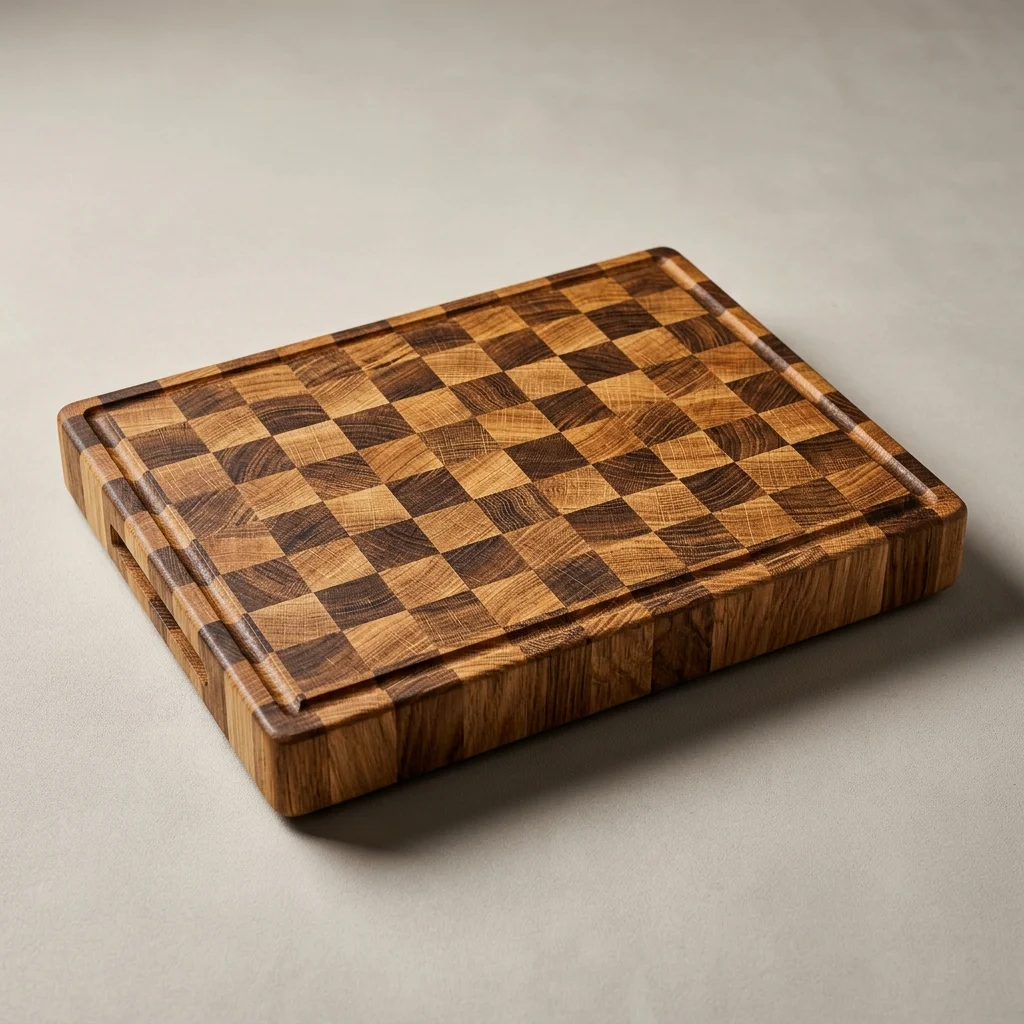
My Honest Look at a Handmade End Grain Board
A few weeks with an oak end grain board in my own kitchen — what I noticed, what surprised me, and whether it's worth it.
I've gone through more chopping boards than I'd like to admit. Cheap plastic ones that warp in the dishwasher, a bamboo one that split down the middle within a year, and a "solid wood" board from a supermarket that turned out to be a thin veneer over particleboard. So when I decided to try a genuinely handmade oak end grain board from The Chopping Block Shop, I went in a little sceptical.
This is not a sponsored post in the traditional sense — I bought and used this board myself, and I'm writing about it because I think it's genuinely worth talking about. I do want to be upfront about one thing before we go any further:
Every link in this article that points to thechoppingblockshop.co.uk is a referral link. Kitchen Board Guide does not sell anything directly — we are an independent editorial site, not a shop. Nothing is purchased, paid for, or fulfilled on this website. Clicking through takes you to the maker's own site, where they handle the order, delivery and support themselves.
First Impressions
The board arrived well packaged, and the first thing I noticed was the weight. This isn't a flimsy prep board — it has real heft, which is exactly what you want from an end grain block. The oak has a warm, honey-brown tone with visible grain running vertically across the surface rather than along it, which is the whole point of end grain construction.
There's a noticeable difference in finish compared to the mass-produced boards I'd used before. No rough patches, no sharp edges, no synthetic-smelling coating. Just wood, hand-sanded and finished with oil. You can genuinely feel the difference the moment you pick it up.
This is a referral link to the official seller. We don't process orders or take payments on Kitchen Board Guide — this link simply takes you to their site.
Using It Day to Day
What actually sold me on end grain construction is how it feels under a knife. Instead of your blade dragging across the fibres like it does on a flat-grain board, it slides in between them. After a few weeks of daily chopping — onions, herbs, the odd chicken breast — my knife still feels noticeably sharper than it would on my old board after the same amount of use.
It's also quieter. That's a small thing, but if you've ever chopped vegetables early in the morning without waking the rest of the house, you'll know why it matters. The surface has a bit of give to it that a lot of factory boards simply don't have.
Where It Falls Short
Nothing is perfect. It's heavier than most people expect, so if you're short on counter space or storage, that's worth considering before buying. It also needs actual maintenance — a monthly oiling isn't optional if you want it to last, and if you're not the type to keep on top of that, a board like this may end up drying out faster than it should.
It's also not cheap in the way a supermarket board is cheap. But comparing the two side by side after a few months, I don't think that's really a fair comparison anymore — one is disposable, and the other isn't.
Would I Buy It Again?
Yes. Genuinely. I don't write that lightly — most "reviews" online are thinly disguised adverts, and I try hard not to write one of those. This board has earned its place on my counter, and short of dropping it on a tile floor, I expect it to still be there in ten years.
Referral link to thechoppingblockshop.co.uk. Kitchen Board Guide does not sell products — all orders, pricing, delivery and returns are handled entirely by the seller.
The Short Version
A genuinely well-made end grain board that performs noticeably better than mass-produced alternatives once you've used it for a few weeks. Heavier and pricier than a supermarket board, but built to be maintained and kept for years rather than replaced.
Editorial note: Kitchen Board Guide is an independent informational website. We are not a retailer and do not process orders, payments or deliveries. All links to thechoppingblockshop.co.uk on this page are referral links to the official seller, who is solely responsible for product listings, pricing, stock, delivery and customer support.